Plugs and voltage, country by country
There are more than a dozen plug shapes in daily use and two broad voltage bands. Knowing which you will meet takes one look before packing.
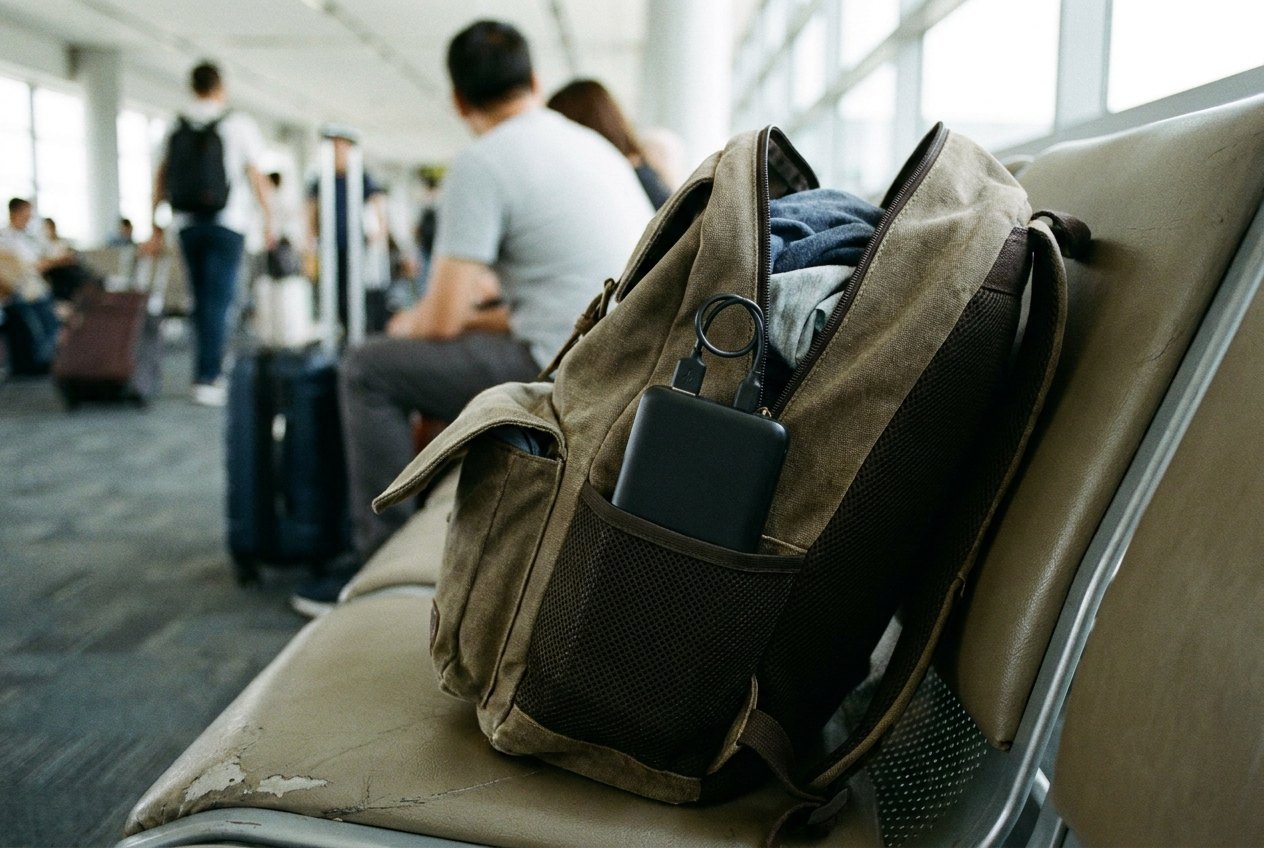
Spare lithium batteries travel in the cabin, never in the hold. Whether yours is allowed depends on one number printed on the case: its capacity in watt-hours.
Every issue so far, newest on the left. Each one covers a single topic and is kept up to date.
There are more than a dozen plug shapes in daily use and two broad voltage bands. Knowing which you will meet takes one look before packing.
A downloaded map turns a phone into a compass that never needs a signal. It only works if the right area was saved, and tested, before the signal disappeared.
An eSIM lets a phone take on a new mobile plan without a plastic card or a shop. For travellers it can mean data on landing and a home number that keeps working.
Free Wi-Fi is everywhere a traveller goes, and most of it is fine for maps, messages and reading. A few habits keep it from becoming the weak point of the trip.
A single charger with the right power and the right ports can replace a handful of bricks. The numbers on its label tell you whether it will cope.
A phone that crosses a border keeps working, which is exactly the problem. Without a plan, a weekend of maps and photos can cost more than the flight.
The photos are the one thing from a trip that cannot be replaced. A short evening routine keeps a second copy somewhere a lost bag or a cracked phone cannot reach.