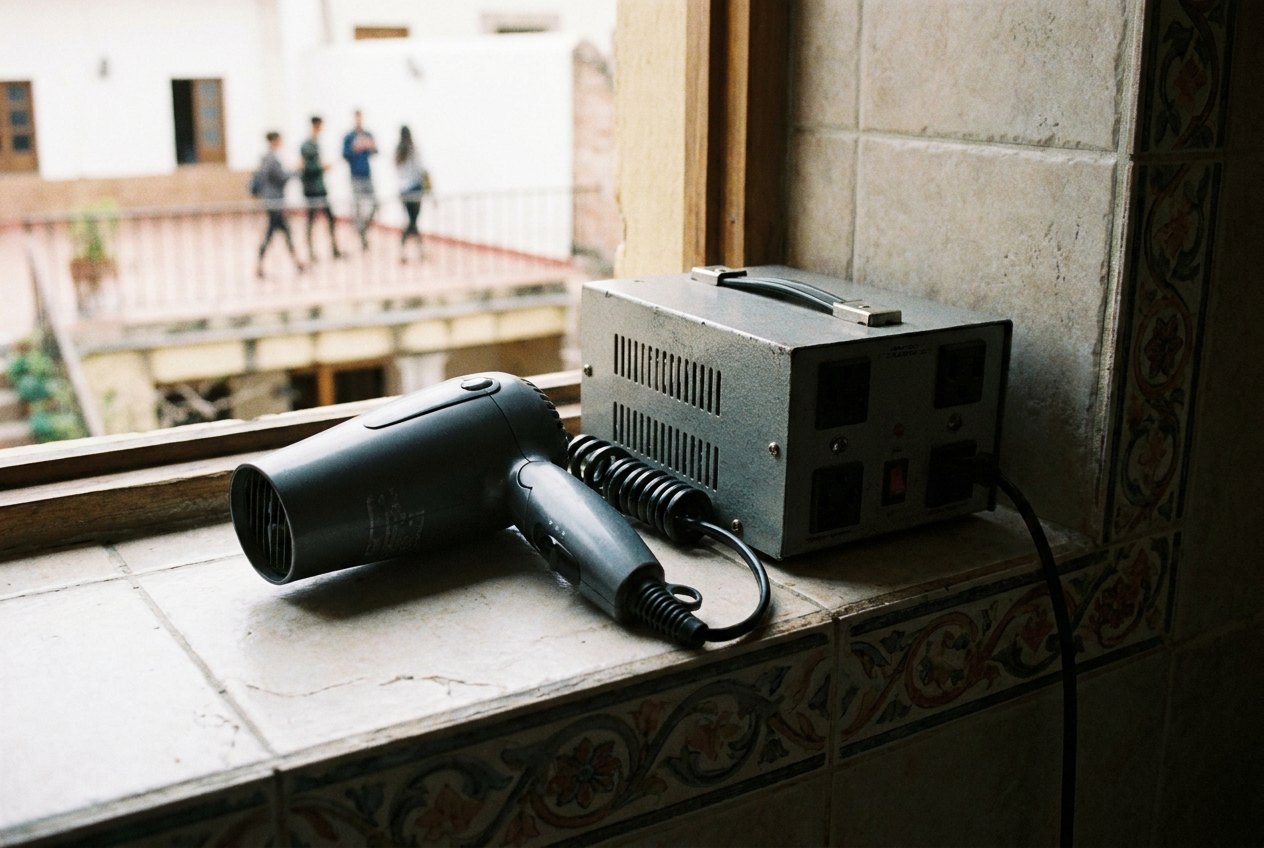
Two different problems meet at a foreign wall socket. One is shape: the pins on your plug may not fit the holes. The other is voltage: the electricity behind the wall may be roughly half or double what your device expects. An adaptor fixes the first problem. Only a converter or transformer fixes the second. Mixing them up is how a hair dryer ends its life in a hotel bathroom in a puff of smoke.
Mains electricity around the world falls into two broad bands. North America, Japan, parts of Central and South America and a few other places use roughly 100 to 127 volts. Most of Europe, Africa, Asia and Oceania use roughly 220 to 240 volts. There is also a difference in frequency, 50 or 60 cycles per second, which matters for some motors and clocks but rarely for chargers. The country-by-country picture is in plugs and voltage, country by country.
What an adaptor does
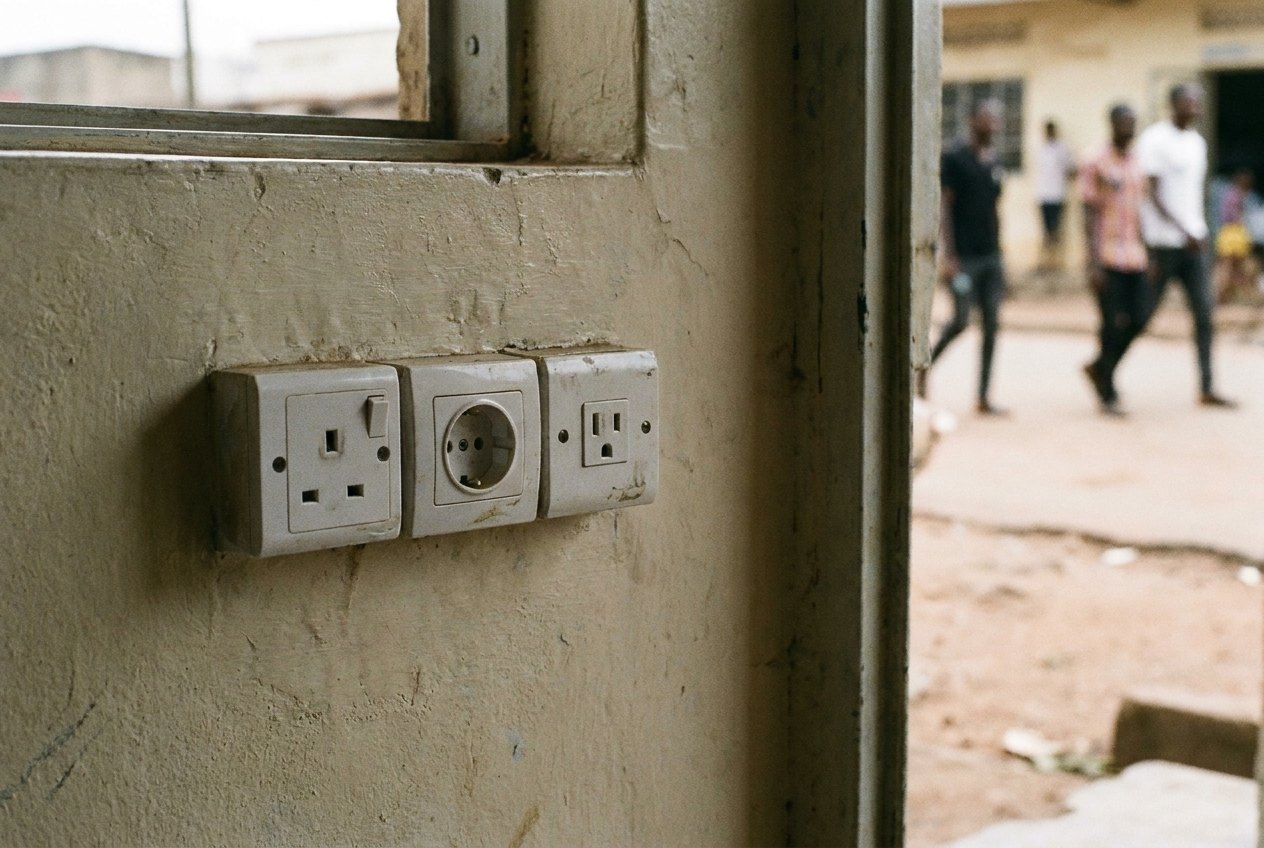
A plug adaptor is a passive piece of plastic and metal. Your plug goes into one side; pins of the local shape come out of the other. It does nothing to the electricity. If your device expects 230 volts and the wall supplies 230 volts, an adaptor is all you need. The same is true if the device can handle both voltages.
A few details matter. Some adaptors do not carry the earth (ground) connection through, which is fine for most two-pin chargers but not for appliances with a three-pin plug that rely on it. Universal adaptors with sliding pins can sit loosely in some sockets; a heavy charger hanging from one may fall out or overheat at a poor contact. If an adaptor gets hot, stop using it. Many have a built-in fuse, and some carry USB ports of their own, which can save a charger altogether for small devices.
Buy adaptors from a reputable shop rather than the cheapest stall at an airport; poorly made ones can have loose contacts that heat up under load.
Adaptors are small, light and cheap. A single universal one with sliding pins covers most plug types, and a simple one-region adaptor is smaller still. One belongs in every tech pouch.
What a converter does
A voltage converter or transformer actually changes the voltage, stepping it down from 230 to 115 or up the other way. Proper transformers are heavy, because they contain a lot of copper and iron. Small travel converters are lighter but are often designed only for short use with simple heating appliances, and may not suit electronics at all.
Converters also do nothing about frequency. A device that relies on 60 cycles per second for timing, such as some older clocks, may run fast or slow on 50 cycles, and some motors run hotter. Modern electronics with switching chargers do not care.
Every converter has a power limit in watts. Plugging in something that draws more than that limit can overheat the converter, the appliance or both.
11Reading the label
The answer for each device is printed on it, usually in tiny letters on the charger brick or the underside of the appliance. Look for the word INPUT.
- INPUT 100-240V ~ 50/60Hz: this device works on both voltage bands. It needs only an adaptor anywhere in the world.
- INPUT 120V ~ 60Hz: this device is built for the lower band only. Plugged into 230 volts with just an adaptor, it is likely to be damaged.
- INPUT 220-240V ~ 50Hz: the reverse. In a 120-volt country it may run weakly or not at all.
Almost all phone, tablet, camera and laptop chargers made in recent years carry the first, wide-range label. Most travellers never need a converter at all.
The appliances that cause trouble
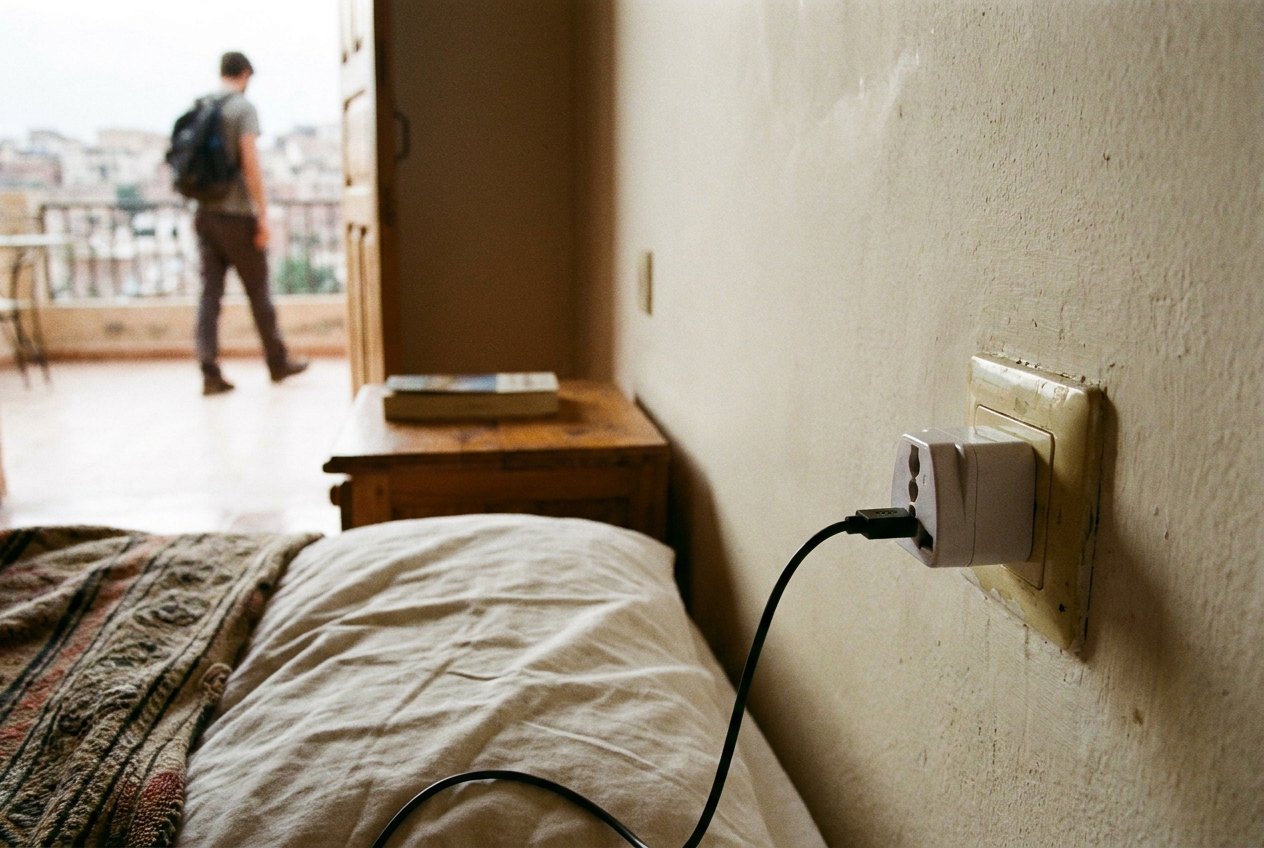
Problems come from things that heat or spin: hair dryers, hair straighteners and curlers, travel kettles, electric shavers with older chargers, beard trimmers, some fans and heated blankets. Many are single-voltage, and many draw well over a thousand watts, far beyond what a small converter can supply for long.
Most travellers never need a converter at all.
A converter big enough to run a full-size hair dryer safely is heavy and expensive, which defeats the point of travelling light. And a dryer built for 120 volts plugged into 230 volts through only an adaptor can overheat within seconds.
Options, roughly in order of preference:
- Check whether the appliance has a voltage switch. Many travel hair dryers and straighteners do; set it before plugging in.
- Use what is already there. Many hotels provide a hair dryer, and some have a kettle.
- Buy a cheap local one if you will be staying a while.
- Use a converter rated well above the appliance's wattage, for short periods only, and never leave it unattended.
Power strips, extension leads and hotel USB ports
A small power strip from home, plugged into the wall through a single adaptor, turns one foreign socket into several home-style ones. It is a neat trick for chargers, but the strip still passes the local voltage straight through, so the same label rules apply to everything plugged into it. Never use a home strip to run a single-voltage heater in a country with the other voltage.
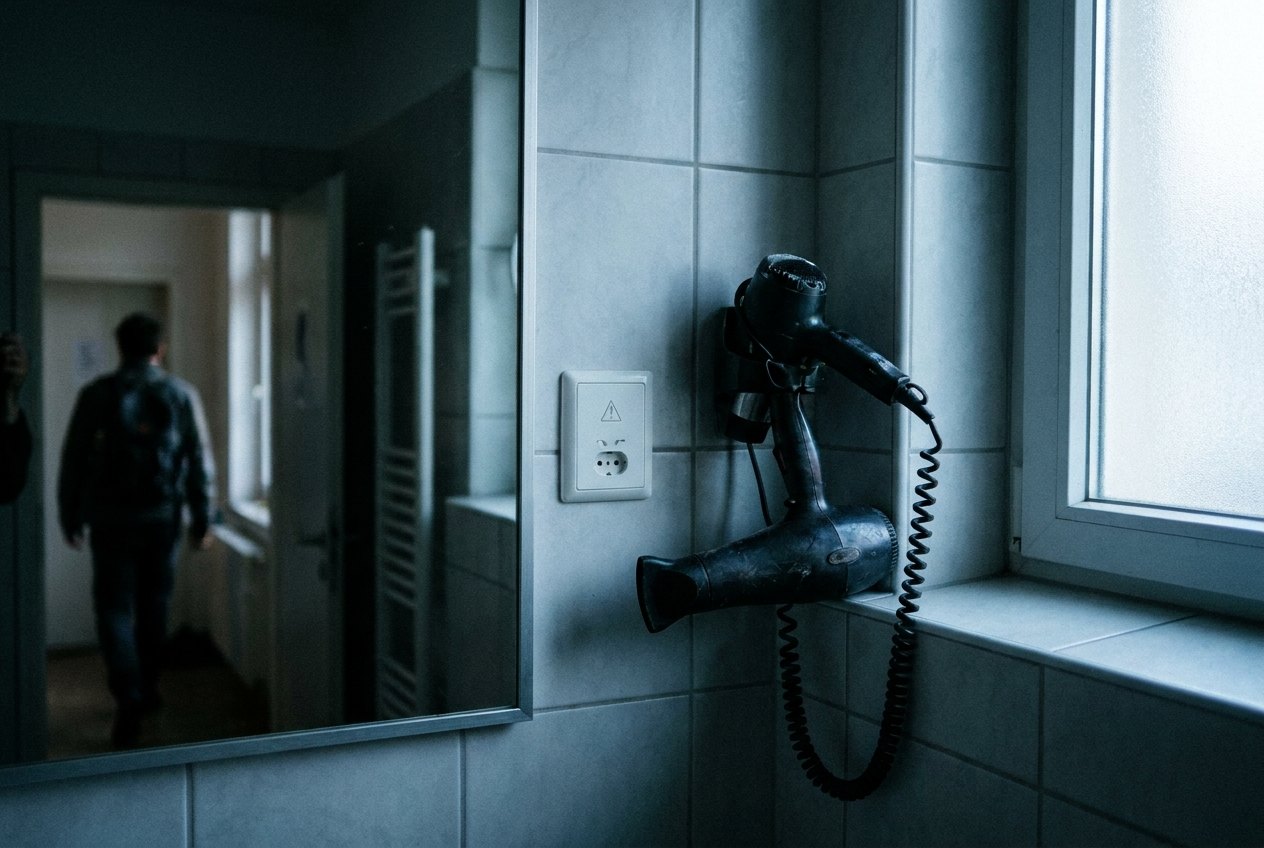
Many hotel rooms now have USB sockets built into lamps and bedside panels. They are convenient for phones and earphones but are often low-powered, so a tablet or laptop may charge slowly or not at all. Your own charger through an adaptor is usually faster.
Some newer hotels fit sockets that accept several plug shapes at once. They save an adaptor, but they still supply only the local voltage.
Bathroom shaver sockets
Some countries, the UK and Ireland among them, fit bathrooms with a special low-power socket marked for shavers or toothbrushes only. It often accepts two-pin plugs of several shapes and may supply both voltages. It is not meant for hair dryers or anything with a heating element: the power is deliberately limited for safety near water. Follow the marking on the socket.
Electric toothbrushes and shavers are worth a separate look. Many recent ones charge from USB and are dual voltage, but older stands and docks often are not, and their labels are tiny. If in doubt, charge them fully before leaving; a toothbrush usually lasts a short trip on one charge.
So the short version: if the label says 100-240V, pack an adaptor. If it gives a single voltage that does not match your destination and the device heats or spins, leave it at home or plan another way. Converters are the exception, not the rule.