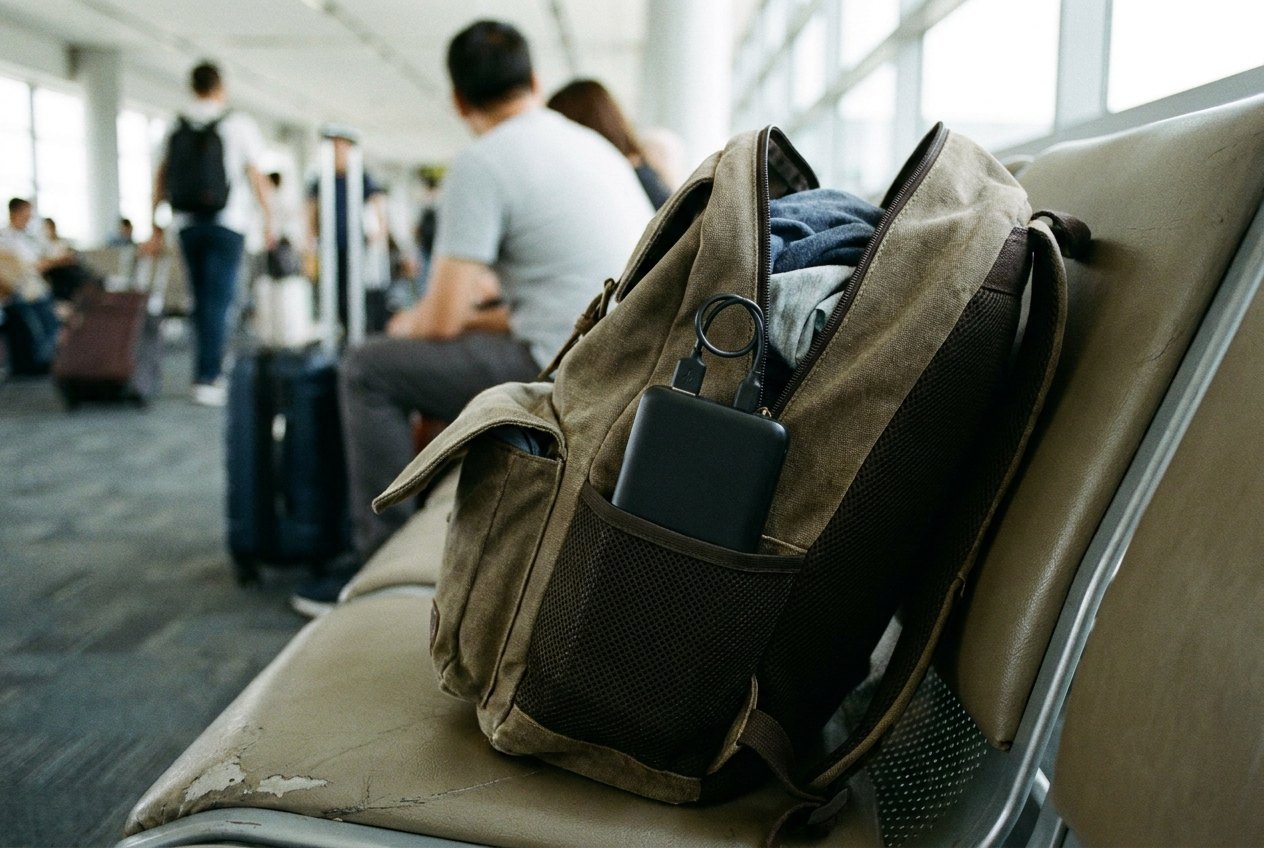
A power bank is a box of lithium-ion cells, the same kind of battery found in phones and laptops. These batteries are safe in normal use, but if one is damaged, faulty or short-circuited it can overheat and catch fire, and a lithium battery fire is hard to put out. That is why aviation rules treat spare batteries carefully, and why gate staff sometimes ask passengers to hand them over.
The rules are simpler than they first appear. They rest on two ideas: where the battery travels, and how big it is.
Cabin, never hold
Spare lithium batteries, including every power bank, must travel in the cabin, in hand luggage or on your person. They are not allowed in checked baggage. The reasoning is practical: in the cabin, a battery that starts to smoke or swell is noticed quickly and crew are trained to deal with it. In the hold, it may not be found until it is too late.
The rules for passenger flights are built on the dangerous-goods standards of the International Civil Aviation Organization, which national authorities and airlines then apply, sometimes with stricter rules of their own.
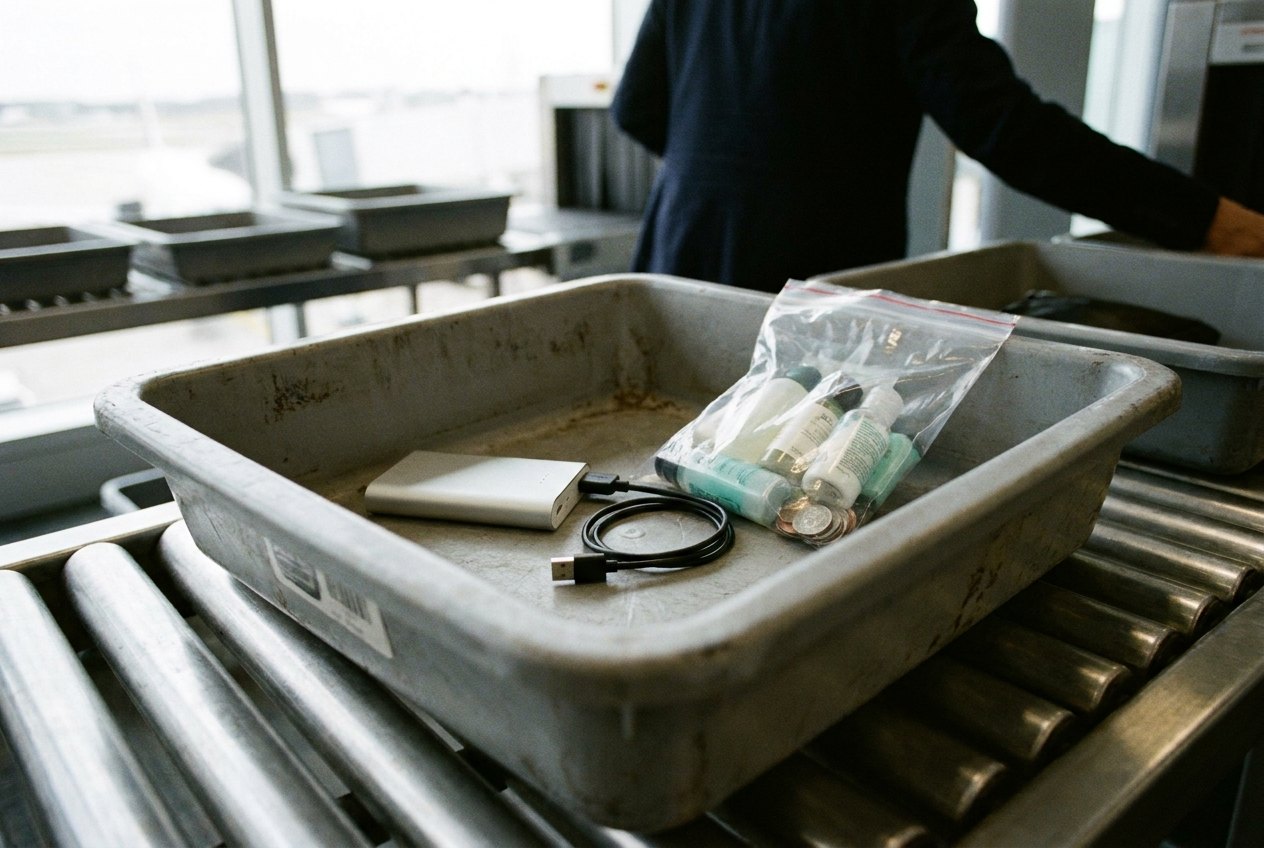
This matters most when a cabin bag is taken from you at the gate because the overhead lockers are full. Before handing it over, take out the power bank, any spare camera batteries and any e-cigarettes, and keep them with you. Explain to staff if they ask; they are trained to expect it.
Reading the watt-hours
The size limits are set in watt-hours (Wh), a measure of how much energy the battery stores. Many power banks print the Wh figure on the case. Many others print only the capacity in milliamp-hours (mAh), which is the number used in advertising. You can convert one to the other:
Watt-hours = milliamp-hours × voltage ÷ 1,000
Most power banks use cells with a nominal voltage of about 3.6 or 3.7 volts, often printed near the capacity. Some worked examples:
| Printed capacity | At 3.7 V |
|---|---|
| 10,000 mAh | About 37 Wh |
| 20,000 mAh | About 74 Wh |
| 26,800 mAh | About 99 Wh |
| 30,000 mAh | About 111 Wh |
If a power bank shows neither figure, or the label has worn off, screening staff may refuse it, because they cannot tell whether it is within the limits. A clear label is worth checking before you leave home.
08The size limits in general terms
Across most airlines and countries, the limits for spare lithium-ion batteries carried by passengers follow the same pattern:
- Up to 100 Wh: generally allowed in the cabin without asking, usually in reasonable numbers for personal use.
- Over 100 Wh up to 160 Wh: usually allowed only with the airline's approval, and often limited to two spare batteries per passenger.
- Over 160 Wh: generally not accepted on passenger aircraft at all.
Almost all phone power banks fall well under 100 Wh. Large laptop power banks and batteries for camera rigs or drones are the ones that cross the line. Airlines and countries can set stricter limits, on the number of power banks as well as their size, so read your airline's page before you fly, and check again before each trip, because these rules have been tightened in recent years.
Before handing it over, take out the power bank, any spare camera batteries and any e-cigarettes, and keep them with you.
Using a power bank during the flight
A growing number of airlines restrict using or charging power banks on board. Some ask that power banks are not used at all during the flight; some forbid charging the power bank itself from the seat socket; some require it to stay out of the overhead locker, where smoke would not be seen. Follow the announcements and the crew's instructions. If you were counting on the power bank to keep a phone alive on a long flight, check the rules first, and lean on the seat socket where there is one, as in downloads and Wi-Fi for a long flight.
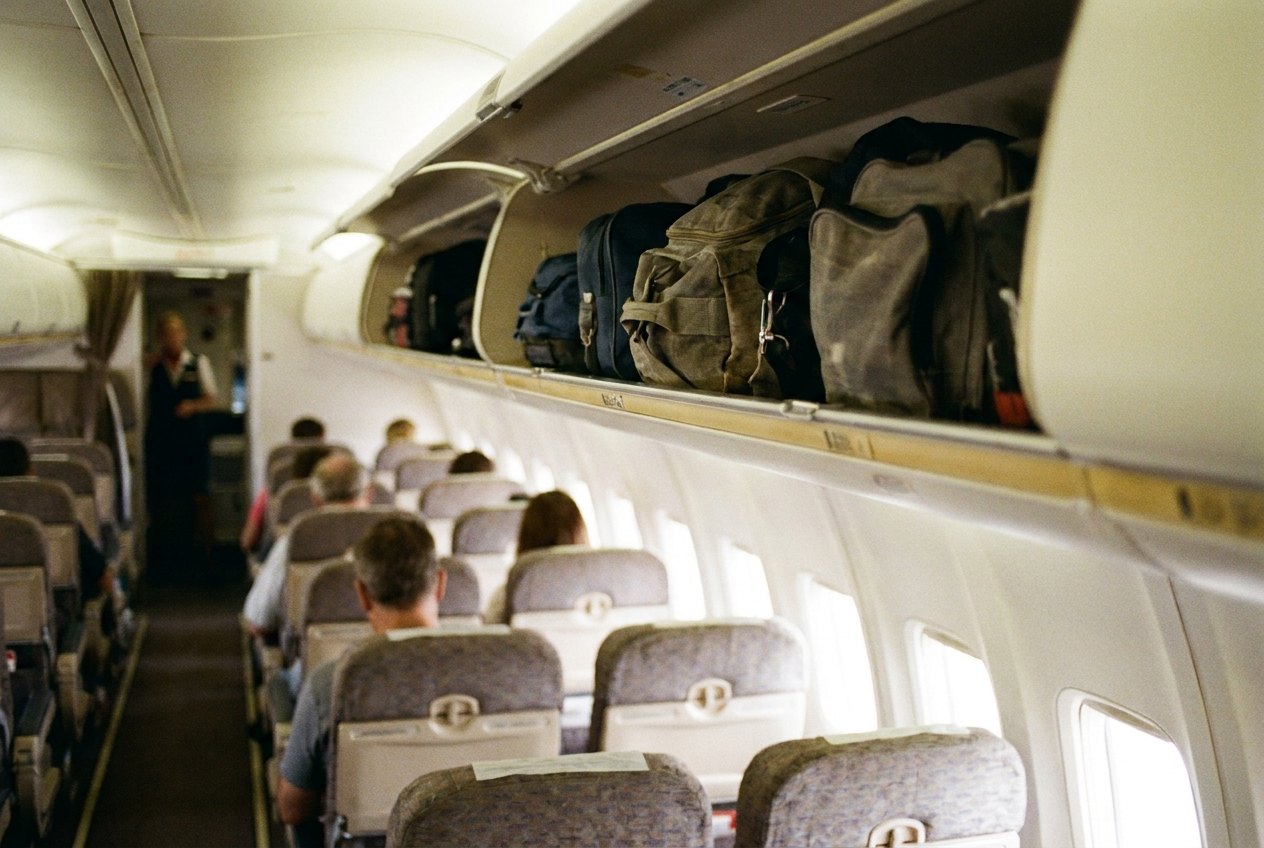
The rules above are about spare batteries. Batteries installed in phones, laptops, tablets and cameras are treated more generously and can usually travel in the cabin or, with care, in checked bags, though most airlines prefer that devices with lithium batteries also stay in the cabin. If a laptop must go in the hold, it should be switched fully off, not asleep, and protected from damage. Smart luggage with a built-in battery usually needs the battery removed before the bag is checked; check the airline's rules, because a bag with a non-removable battery may be refused.
E-cigarettes and vaping devices are treated like spare batteries: cabin only, and not to be used or charged on board. Spare camera batteries follow the same watt-hour limits as power banks, and their terminals should be covered with a cap or kept in a small case.
Packing it safely
The rules also ask that spare batteries are protected from short circuits. In practice:
- Keep the power bank in its own pocket, away from coins, keys and loose metal.
- Do not leave cables plugged in while it is packed.
- Keep it where you can reach it, ideally in a bag under the seat in front rather than an overhead locker.
- Pack it in the tech pouch with its cable, so it comes out easily if security asks to see it.
Damaged and swollen batteries
A power bank that has been dropped hard, crushed, soaked, or that has become swollen, hot or misshapen should not fly at all, and should not be charged. Swelling is a sign the cells are failing. Take it out of use and dispose of it at a proper battery recycling point, not in household waste.
Buying a power bank abroad has its own trap: some sold at markets and airports carry capacity figures that are exaggerated, or no proper marks at all. Buy from a reputable shop, and keep the receipt if security asks about it.
Old power banks that have been through many years of charging hold less and can become less stable. If one no longer charges a phone fully, or takes far longer to charge than it used to, it is near the end of its life. Recycle it and buy a new one with a clear label.
If a power bank or any device starts to smoke, smell or get very hot during a flight, tell the crew immediately. Do not try to cover it, cool it with ice or carry it to the toilet. Crew have equipment and training for exactly this, and acting fast is what keeps it small. The same caution applies to a phone left too long in a freezing car and charged straight away, as described in phones and batteries in the cold.